
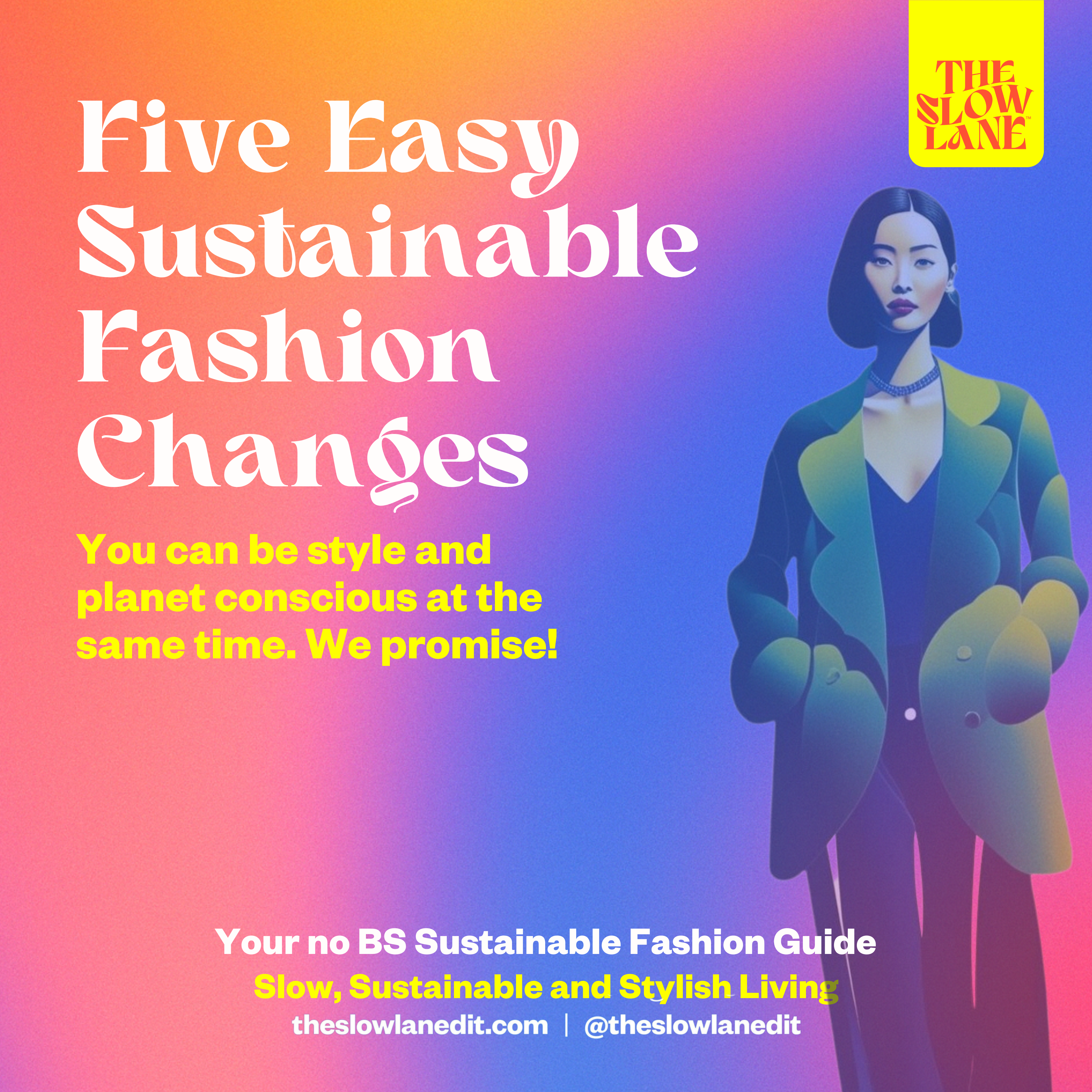
Small changes can add up to a big difference, and living more aligned to your values has proven to create a greater sense of personal fulfilment. You’re here because you want to balance your love of fashion and self-expression with your values and we’re here to help you do that.
Elevate your style while reducing your environmental impact with these simple, sustainable fashion tips.
Tip 1: Buy Preloved or Rent Clothing
1. Fresh Start
Buying secondhand & vintage clothing gives existing garments a new life, preventing them from ending up in landfills.
2. Unique Style
Preloved pieces are often one-of-a-kind. So buying vintage or renting means there’s no risk of showing up to the party in the same outfit as someone else!
3. Save Money
Shopping preloved or renting is typically more affordable than buying new, and it gives you access to brands previously out of your price range.
Tip 2: Invest in Timeless, High-Quality & Durable Garments
Longevity
Well-made, high-quality, anti-trend clothing lasts longer, reducing the need or desire to replace items frequently.
Cost-Effective
While the initial investment may be higher, durable garments save money in the long run.
Environmental Impact
Purchasing fewer, better-quality items decreases the overall environmental footprint of your wardrobe.
Timeless Style
Classic designs aligned with your personal style maintain their fit, style, and relevance year after year.
Tip 3: Repair and Repurpose Existing Clothes

REVIEW
Inspect your clothes regularly for minor tears, worn-out areas, or other fixable issues.
REPAIR
Learn simple sewing techniques or seek the help of a local tailor to mend damaged garments
REPURPOSE
Get creative by transforming old clothes into new items, like turning a shirt into a tote bag or a scarf.
Tip 4: Opt for Sustainable Fashion and Slow Brands – Say No to Fast Fashion
Tip 4: Opt for Sustainable Fashion and Slow Brands – Say No to Fast Fashion
One of the most significant changes you can make immediately is to stop purchasing from fast-fashion brands. Overconsumption has far-reaching impacts, contributing to some pretty scary numbers regarding global pollution, waste, and poverty. Slow down. Do you need to buy anything new at all? If you do look for slow fashion brands with minimal environmental impact and ethical trading practices.

SLOW PRODUCTION
Slow fashion brands prioritise quality over quantity, focusing on timeless designs and ethical manufacturing.
SUSTAINABLE MATERIALS
Slow fashion utilises eco-friendly fabrics like organic cotton, recycled polyester, and natural dyes.
ETHICAL LABOUR
Slow fashion supports ethical labour conditions and fair wages for the people who make your clothes.
DURABLE DESIGNS
Slow-fashion garments are built to last, reducing the need for frequent replacement.
Tip 5: Choose Sustainable Fabrics and Materials
Tip 5: Choose Sustainable Fabrics and Materials
ORGANIC COTTON
Organic cotton reduces global warming potential by around 46% compared with its non-organic counterpart. It also reduces blue water consumption and primary energy demand. Factor in the social and economic benefits and the fact that it’s super soft, and it’s a win.
If you’d like to read more about organic cotton we recommend the Soil Association’s website.
HEMP
A durable, renewable, and biodegradable natural fibre that is fast growing, high yield and low maintenance.
LINEN
Linen is a breathable, moisture-wicking, biodegradable fabric derived from the flax plant. It is one of the least environmentally damaging textiles.
RECYCLED POLYESTER
Recycled polyester reduces waste, has a lower carbon footprint than virgin polyester, and is versatile. Be aware, though, it is still non-biodegradable.
Implementing some of these tips to make more sustainable fashion choices can help you make a meaningful impact on the environment and express your personal style guilt-free.